
Enterprise Solution
Connect enterprise knowledge, intelligent workflows, and operational insight to everyday work
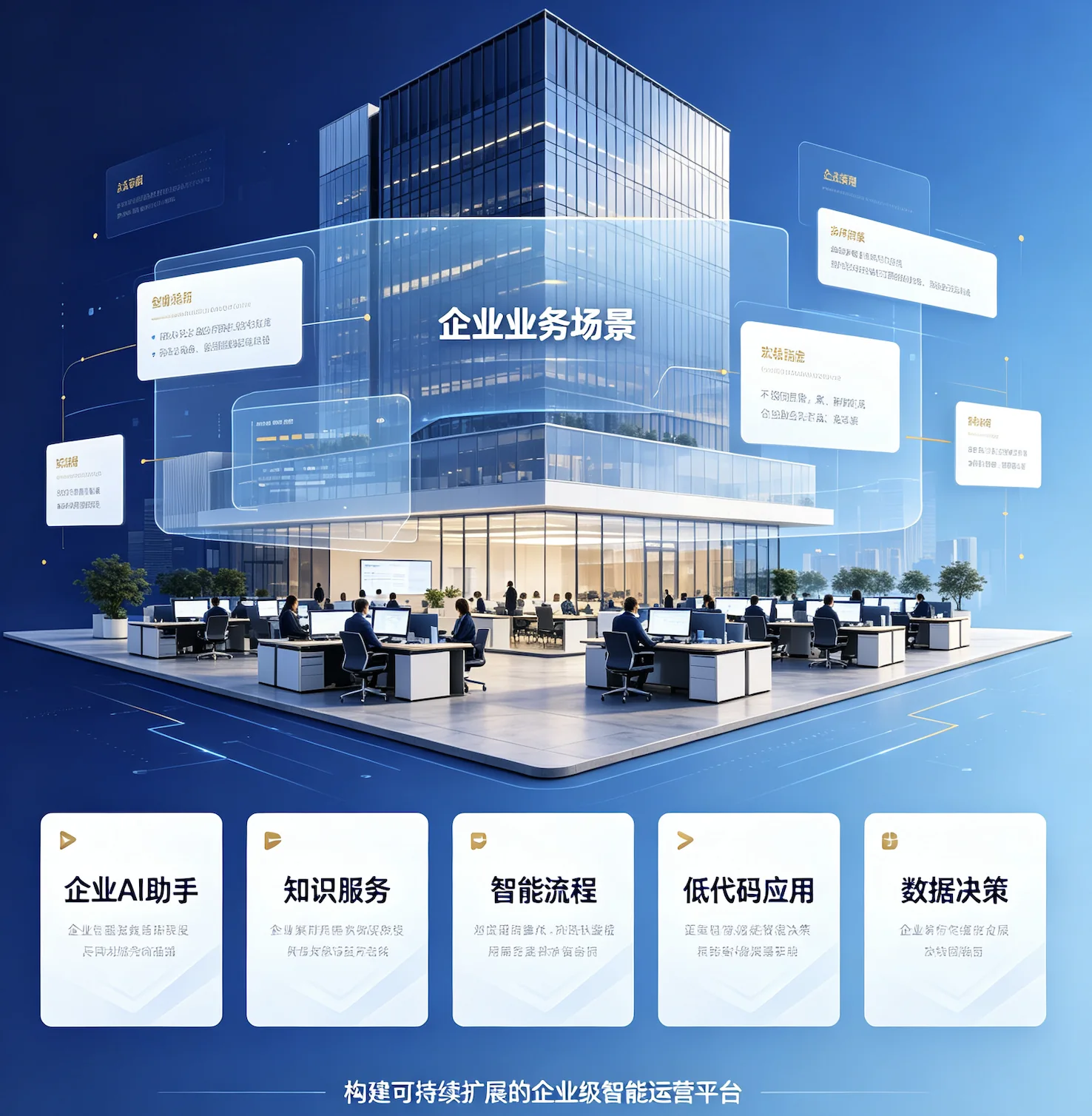
Bring knowledge, workflows, and data into the work people perform every day.Enterprises have accumulated policies, contracts, project files, customer records, and operational data across many systems. Yet employees still ask experienced colleagues where to find an answer, cross-team work still moves through spreadsheets and messages, and leadership views often lag behind frontline execution. Having data and software does not mean those capabilities have entered the work itself.
Qukai's enterprise solution starts with frequent, valuable work scenarios and organizes knowledge services, AI assistants, workflow orchestration, low-code applications, and analytics on one platform. Employees receive evidence-based answers within their access rights, tasks move through explicit rules, applications can evolve with the business, and indicators connect to processes and action. Information, execution, and improvement become one traceable operating loop.
Designed for
- Enterprise leaders and digital transformation teams
- Operations, sales, procurement, and project teams
- Knowledge, process, and data management teams
Core goals
- Make enterprise knowledge securely searchable and reusable
- Make cross-team workflows configurable and traceable
- Turn operational data into sustained business action
Business challenges
Move from isolated systems to continuous coordination
Combine enterprise knowledge, AI assistants, workflow automation, low-code applications, and operational analysis so teams find information, execute work, and improve the business faster while keeping access, evidence, and actions traceable.The organization has knowledge, but employees cannot find dependable answers
Policies, contracts, products, projects, and customer information are spread across folders, repositories, and business applications. Traditional search returns files without understanding intent, while an unrestricted generative model may answer without evidence or expose information outside a user's role.
Workflows depend on manual follow-up and hide responsibility
Approvals, procurement, delivery, customer service, and internal coordination cross many roles. Policy documents describe the rules, but actual work relies on email, spreadsheets, and personal reminders. Tasks are missed and managers cannot see where work is waiting.
Business change moves faster than conventional application delivery
Campaigns, projects, and departmental collaboration frequently need new forms, rules, and views. Fully custom development extends lead time, while unmanaged point tools duplicate data and introduce access, support, and continuity risk.
Dashboards show outcomes without connecting the next action
Sales, supply-chain, finance, and risk indicators may be visible, but explanations, accountable teams, and improvement tasks are tracked elsewhere. When analysis and workflow remain separate, insight rarely becomes dependable operating action.
Solution architecture
A unified business intelligence platform for knowledge, workflow, applications, and data
The architecture connects enterprise documents, data platforms, and business systems through shared identity and access. Knowledge services, agents, workflow engines, low-code components, and analytics create a cross-system workspace without replacing specialist applications. Frequently used capabilities become reusable services for many teams.
Knowledge citations, tool calls, workflow actions, and data access retain context and audit records. Business teams participate in configuring content, rules, and applications, while technology teams govern interfaces, security, release, and operations. This balances rapid scenario innovation with the stability expected of an enterprise platform.
Five-layer capability architecture
Enterprise content and data layer
Policies, contracts, projects, customers, transactions, and operational data retain source, version, and access context.
Knowledge and agent layer
Semantic retrieval, answers, summarization, rule interpretation, and controlled tool use support role-specific assistants.
Workflow automation layer
Policy requirements become executable approvals, assignments, validation, reminders, and collaborative processes.
Application and analytics layer
Low-code components create business applications and connect metrics, exceptions, and actions in management views.
Security and operations layer
Identity, access, knowledge freshness, model feedback, releases, audit, and service quality are governed continuously.
Core scenarios
Organize intelligence around real operational journeys
Core Scenario One
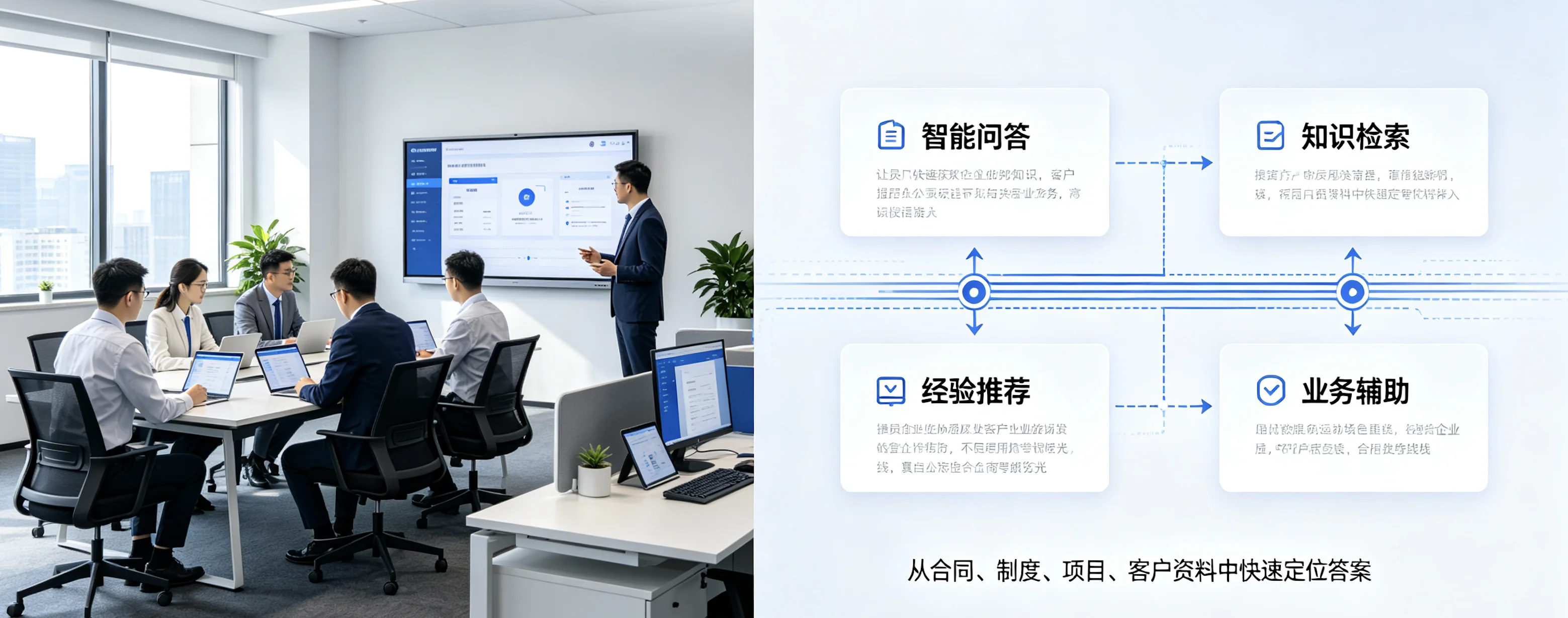
Enterprise knowledge service and role-based AI assistants
Policy inquiry, contract understanding, project search, customer support, and task assistance provide employees with answers that are sourced, authorized, and ready for further action.- Current challenge
- Employees know information exists but cannot identify its location or latest version. Critical experience concentrates in a few people, and new colleagues spend substantial time asking and learning. Public models cannot satisfy enterprise access, citation, and specialist-context requirements.
- Solution approach
- The platform connects documents and structured data by organization and business topic, preserving version, labels, access, and citation relationships. A role assistant retrieves only authorized material, shows its evidence, and can invoke approved queries or business tools.
- Operating model
- Knowledge owners maintain sources and effective periods, subject experts review important answers and rules, and employees flag missing or unhelpful results. Usage evidence reveals frequent questions, knowledge gaps, and business processes that need improvement.
- Expected value
- Employees gain a stable knowledge entry point and individual experience becomes an organizational asset. Onboarding, business inquiry, and customer response operate from more consistent rules and evidence.
Core Scenario Two
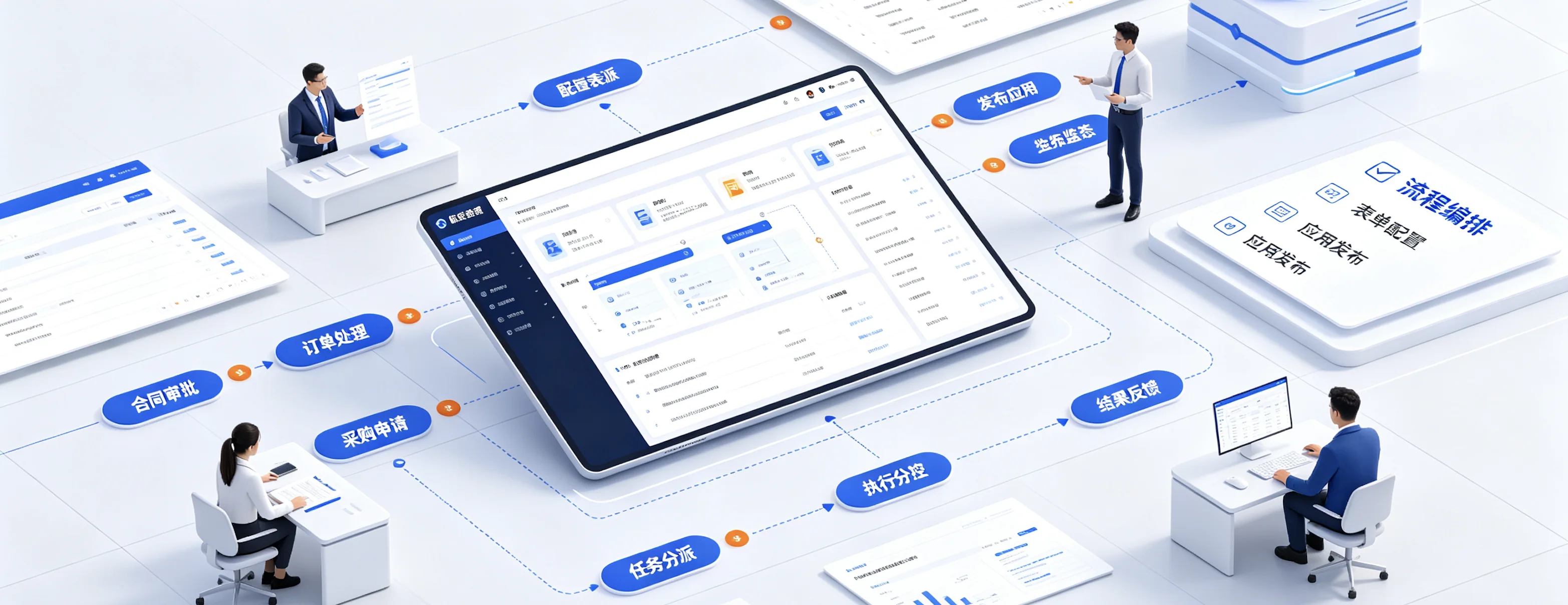
Intelligent workflows and low-code business applications
Requests, approvals, task assignment, execution feedback, and application releases become configurable workflows that keep pace with changing business needs.- Current challenge
- Many cross-team processes lack one entry point. Rules depend on personal interpretation, while documents and status remain in communication tools. Even modest changes wait for a full development cycle, causing actual work and system workflows to drift apart.
- Solution approach
- Forms, workflows, rules, notifications, access, and data components are standardized. Business and technology teams define the process together. Intelligence supports document recognition, validation, content preparation, and task suggestions while authorized people retain important decisions.
- Operating model
- Every stage retains its inputs, actions, and outcomes. Managers see waiting, returns, and repeated processing, then change rules through controlled versions and staged release rather than exposing the whole business to an unvalidated modification.
- Expected value
- Cross-team work gains a clear entry, status, and owner. Common needs reuse governed components for faster delivery without abandoning release, security, and data-management requirements.
Core Scenario Three
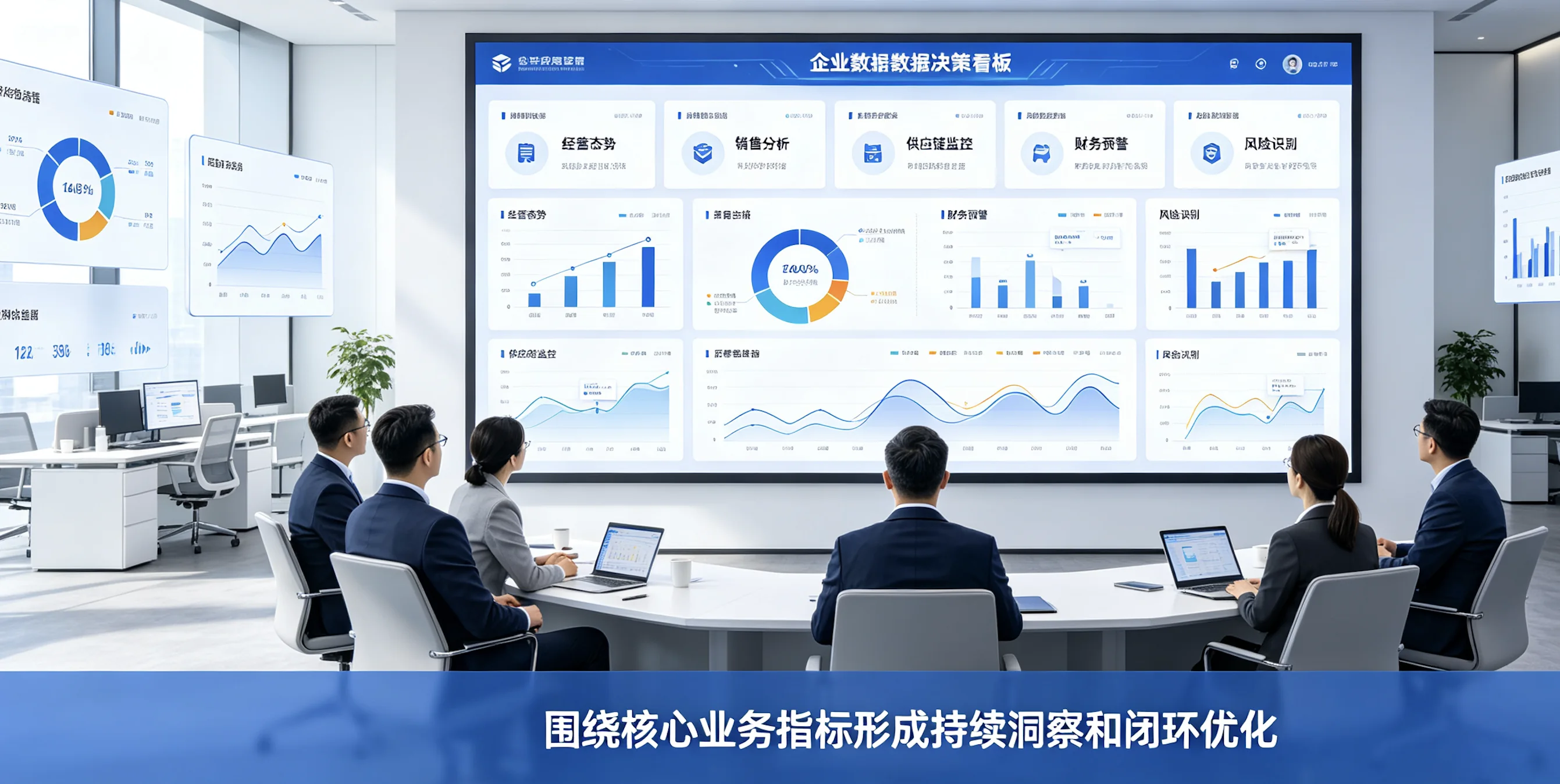
Operational analytics and data-informed decisions
Consistent indicators for business trends, sales, supply chain, finance, and risk connect exceptions directly to analysis, tasks, and improvement workflows.- Current challenge
- A dashboard displays results, but definitions, causes, and follow-up ownership remain unclear. Analysts repeatedly prepare material, and actions agreed in meetings move to other tools, separating data from operational improvement.
- Solution approach
- Metric semantics, sources, and ownership are governed and linked to customers, orders, projects, suppliers, and process records. When a pattern changes, knowledge and analytical models produce assessment leads that become collaborative tasks with context attached.
- Operating model
- The operating team owns metric definitions and analysis routines, while business teams explain causes and own action. Progress and outcomes return to the indicator view, preserving a continuous record from discovery and explanation through execution and review.
- Expected value
- Leaders see not only numerical change but also evidence, impact, and action status. Analysis moves closer to execution, and improvement experience becomes new rules, workflows, and shared knowledge.
Delivery roadmap
Move from an operational blueprint to continuous improvement
Scenario discovery and value prioritization
Identify high-frequency work, knowledge gaps, workflow delays, and operating questions that are suitable for an initial intelligent scenario.
Stage deliverables- Business scenario and problem inventory
- Value, risk, and priority assessment
Data, knowledge, and access preparation
Map content sources, system interfaces, data quality, and access boundaries to create a usable knowledge and identity foundation.
Stage deliverables- Knowledge and data connection design
- Access, citation, and governance rules
Minimum closed-loop pilot
Build one complete assistant, workflow, or application loop and let real users validate answers, actions, and business outcomes.
Stage deliverables- Pilot application and workflow
- User feedback and outcome assessment
Capability reuse and scaled adoption
Package stable knowledge services, workflow nodes, tools, and components on the platform before extending them to more teams and processes.
Stage deliverables- Reusable capability catalog
- Adoption, training, and release plan
Operational governance and continued optimization
Continuously manage knowledge freshness, model feedback, workflow health, application releases, and access change so intelligent services remain dependable.
Stage deliverables- Operating dashboard and ownership model
- Issue closure and iteration process
Lasting value
Turn platform capabilities into lasting operational value
Knowledge becomes an available business capability
Employees receive evidence-based answers within their access rights, while organizational experience remains current and reusable.
Business workflows become visible and adaptable
Entry points, stage ownership, and status are explicit, while rule changes reach production through governed versions.
Application delivery stays closer to business change
Reusable components and low-code delivery shorten validation for common needs while preserving technology governance.
Operational insight connects to real action
Metrics, causes, tasks, and outcomes remain one continuous record so analysis directly supports business improvement.